
Locate verification within the process
A team automating registrations, queries, or document submission needs to identify exactly where Turnstile participates in the journey. A component on the page does not, by itself, explain how the service decides to accept an operation. Browser activity, backend communication, and application rules all contribute.
Start by describing the business action: registering a supplier, checking an application, or updating an order. Then associate verification with the moment that action will actually be submitted. This map prevents every visible interruption from being treated as an equivalent failure with an identical recovery procedure.
Consider a support center entering information into an authorized portal. The useful success condition is confirmation of the case reference in the portal, rather than a positive component indicator alone. The workflow can still encounter an ended session, missing required field, inconsistent document, or insufficient permission.
Record these conditions separately so support staff know whether to correct information, renew the session, or wait. Automation becomes more predictable when each stage has an observable outcome and an owner for recovery. Successful verification belongs to that evidence set without granting universal authorization for subsequent business operations.
Managed, Non-Interactive, and Invisible
In Managed mode, Cloudflare decides whether additional interaction is necessary, potentially asking the visitor to check a box. In Non-Interactive mode, the component remains visible during verification but requests no interaction. In Invisible mode, verification runs without a visible component.
These three options should not be interpreted as universal authorization levels. For journey design, the relevant difference is what the user may need to do and what progress feedback the interface provides. The choice depends on the intended experience and the configuration maintained by the website owner throughout its operating lifecycle.
Also distinguish widget mode, appearance, and execution timing. A visible component can appear only at a particular stage, while verification can begin alongside form preparation. Keeping these decisions separate helps avoid two poor outcomes: hiding a delay without explanation or beginning verification long before an operation is ready.
In an application you own, test the journey with keyboards, screen readers, and unstable connections. In a third-party portal, document observed behavior and permitted continuation paths. The mode name does not remove the need to test the complete journey under realistic operating conditions.
The client token must reach the server decision
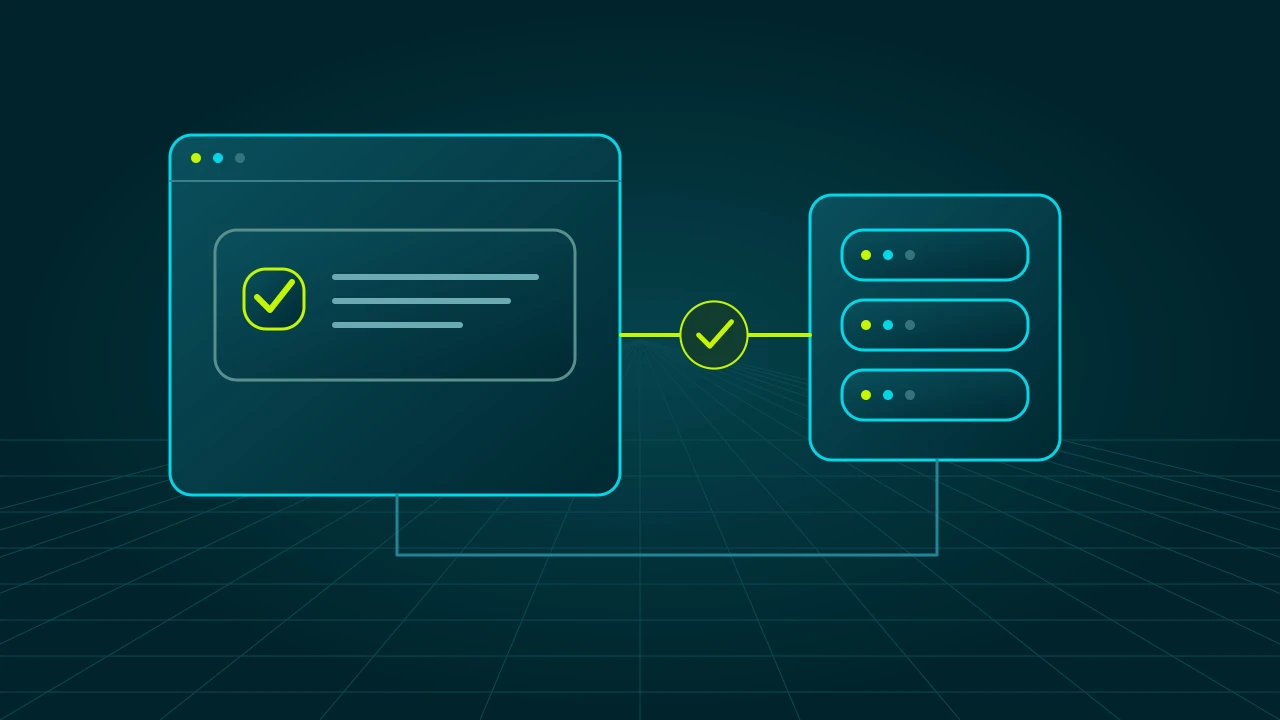
The integration has separate responsibilities. The browser component produces a token that accompanies the request submitted by the application. The backend must validate that result with Cloudflare before completing its decision. A client success message alone does not replace this validation.
In applications you own, keep the secret key in the server environment and define which component controls the transition into processing. The team should be able to demonstrate that a request without an accepted result cannot proceed merely because the interface displayed a favorable animation or enabled a submission button.
Do not confuse this token with clearance mechanisms used by other Cloudflare protections. A configuration using pre-clearance can involve a clearance cookie whose role and scope differ from the result submitted with a form. The project should identify which artifact each stage uses without assuming they share a lifetime or replace required validation.
This matters when a portal combines edge protection, authentication, and application verification. An accurate diagnosis identifies the layer that interrupted the workflow instead of attributing every unexpected response to the Turnstile component or treating all browser state as interchangeable.
Plan validity together with queues
A Turnstile token is valid for five minutes and is intended for a single validation. The documentation also explains that reuse detection depends on state propagation across the network. The application therefore needs its own protection against duplicate business operations.
For an operational queue, the practical consequence is straightforward: do not produce verification results to store while jobs wait indefinitely. Prepare data, confirm execution capacity, and place verification close to submission. Measure the delay between these stages, because adding workers cannot repair a design that consumes validity before the result is used.
Imagine a batch of one hundred applications that require documents before submission. If the team starts verification and only then retrieves files from a slow repository, that bottleneck appears as expiration. A better organized design finishes preparation before the time-sensitive stage while respecting the portal's supported workflow.
When waiting is unavoidable, record that the job needs fresh verification at the appropriate moment. Do not reuse an old result as though it were a durable credential. Keep the verification window, session lifetime, and deadline for delivering the completed work to the customer distinct.
Preserve work when the journey needs to resume
Long forms deserve a recovery design that preserves legitimate work. A user may review information for several minutes, receive a call, or return after a break. In an application you own, keep business state separate from temporary verification state. A proposal draft can remain available even when another verification is required.
Explain the reason for waiting in plain language and provide a clear way to continue. The objective is to prevent a technical requirement from causing the loss of information already entered or producing multiple duplicate proposals during repeated attempts to finish.
In assisted automation, define the handoff to a person before putting the process into production. The operator needs enough context to continue the same application without repeating completed steps. After human participation, automation should check the portal's actual state and record final confirmation.
This coordination requires attention to concurrency: two workers should not try to complete the same order simultaneously. A job identifier and temporary ownership mechanism help organize execution. These are business process decisions independent of the visual presentation chosen for Turnstile, and they remain necessary when verification appears to finish immediately.
Test integration and business outcomes
Cloudflare provides test keys for controlled integration scenarios. These support predictable responses in development without depending on real challenges every time the test suite runs. Use this facility in environments you control and keep production configuration separate.
A useful test checks product behavior: an accepted application is recorded once, a rejection displays an understandable message, and a delay permits recovery. Also confirm that test configuration cannot reach the published application. Passing the suite demonstrates programmed behavior under those conditions, rather than a guaranteed success rate across real traffic, future browsers, or unrelated external portals.
The way the component loads also deserves review. Static pages and interfaces that create forms dynamically have different needs; the documentation distinguishes implicit and explicit rendering. In a multistage application, check that opening and closing a modal does not leave old components active or associate a result with the wrong form.
Include backward navigation, page refresh, and repeated submission in the exercise. For external portals, test only within the authorized scope and maintain a small set of representative cases. Each case should have completion evidence that the team can inspect and reconcile.
Turn failures into recovery decisions
Connectivity, browser compatibility, configuration, and challenge execution problems can appear on the client. A recovery policy needs to classify the problem before repeating the job. A temporary failure may justify a bounded retry; incorrect configuration requires correction, and an access denial must follow the appropriate support workflow.
Define the maximum attempts, interval, and stopping condition for each category. Avoid a single retry rule for every error because it can increase traffic without improving the likelihood of completing the operation or clarifying the underlying cause for the team responsible for resolving it.
When a final response is uncertain, inspect order status before submitting it again. A network interruption can happen after the backend has already completed the work. Repeating the entire application can then create a duplicate even though verification worked correctly. The operational record should distinguish an unknown outcome from a rejected outcome.
Route unknown cases into reconciliation using the reference number, time, and business identifier. This practice reduces incidents in purchasing, scheduling, and registration, where performing the action twice often costs more than briefly waiting to establish what actually happened on the server.
Measure each stage without exposing credentials
An operational dashboard should separate jobs started, components loaded, results received, validations accepted, and business actions confirmed. Turnstile supplies validation information and traffic dimensions that help investigate differences between environments. Combine those signals with application records according to the access available to each team.
A decline in completion can happen after verification and therefore may not appear as a component problem. Compare volumes using the same period and denominator. One hundred accepted results among one hundred validations means something different from one hundred completed orders among one thousand jobs originally started.
Record duration, error category, integration version, and a correlation identifier. Do not turn complete tokens, secret keys, or personal documents into routine log material. Investigating expiration usually requires knowing when the result was obtained and when the request reached the server. Investigating repetition requires linking attempts for the same job.
Establish retention and access appropriate to how these records are used. An alert should suggest an actionable investigation, such as checking queue growth or a recent deployment, rather than merely announcing that an aggregate indicator turned red without the context needed to respond.
Calculate cost per completed operation
The budget needs to separate verification service, automation execution, infrastructure, and exception handling. Consult Cloudflare's official plans to understand the contract applicable to the website without assuming that a free feature removes the journey's operating cost. Development time, maintenance, and human intervention remain relevant.
To compare alternatives, use cost per operation completed correctly and within the required deadline. An option with a lower price per attempt can become more expensive when it requires many repetitions, expands the queue, or needs frequent manual review before cases can be closed and delivered to customers.
Scaling means increasing useful work while keeping execution times under control. Run a pilot with progressively larger volumes and track latency, waiting, expiration, repetition, and completion. If doubling concurrency worsens the delivery proportion, investigate the bottleneck before expanding again. It may sit in data preparation, the destination service, or reconciliation.
Establish limits per workflow and reserve recovery capacity. Planning should also account for portal changes and browser maintenance. No architecture should advertise unlimited capacity based on a single favorable exercise involving a handful of requests under highly specific conditions that may not reflect normal demand.
Position VLSM within the integration contract
VLSM.io positions CaptchaBroker, its CAPTCHA resolution service, as proprietary humanization and process automation technology, supporting scale and charging for valid tokens delivered. Its stated independence concerns third-party solving providers; it does not mean independence from Cloudflare, website decisions, or the context required by verification.
During commercial evaluation, describe the authorized process, environments, and expected outcome. Confirm the supported scope for the specific case. The proposal should explain how delivery will be identified and exceptions handled without promising disabled protections or universal approval across every portal, browser, configuration, and future change to the destination service.
Before expanding the project, assemble a documented workflow, sample cases, acceptance criteria, and operational owners. Agree on what constitutes a valid token delivered and maintain a separate measure for completed transactions, which includes other destination rules. Validate the complete journey in a pilot, including expiration, intervention, and uncertain responses.
Then size expansion using evidence of capacity and cost. The CAPTCHA Solver solution, the explanation of what a solver is, and the introduction to CAPTCHA complement this assessment. The investment becomes clearer when every dependency has a defined boundary and a verifiable way to monitor its contribution.